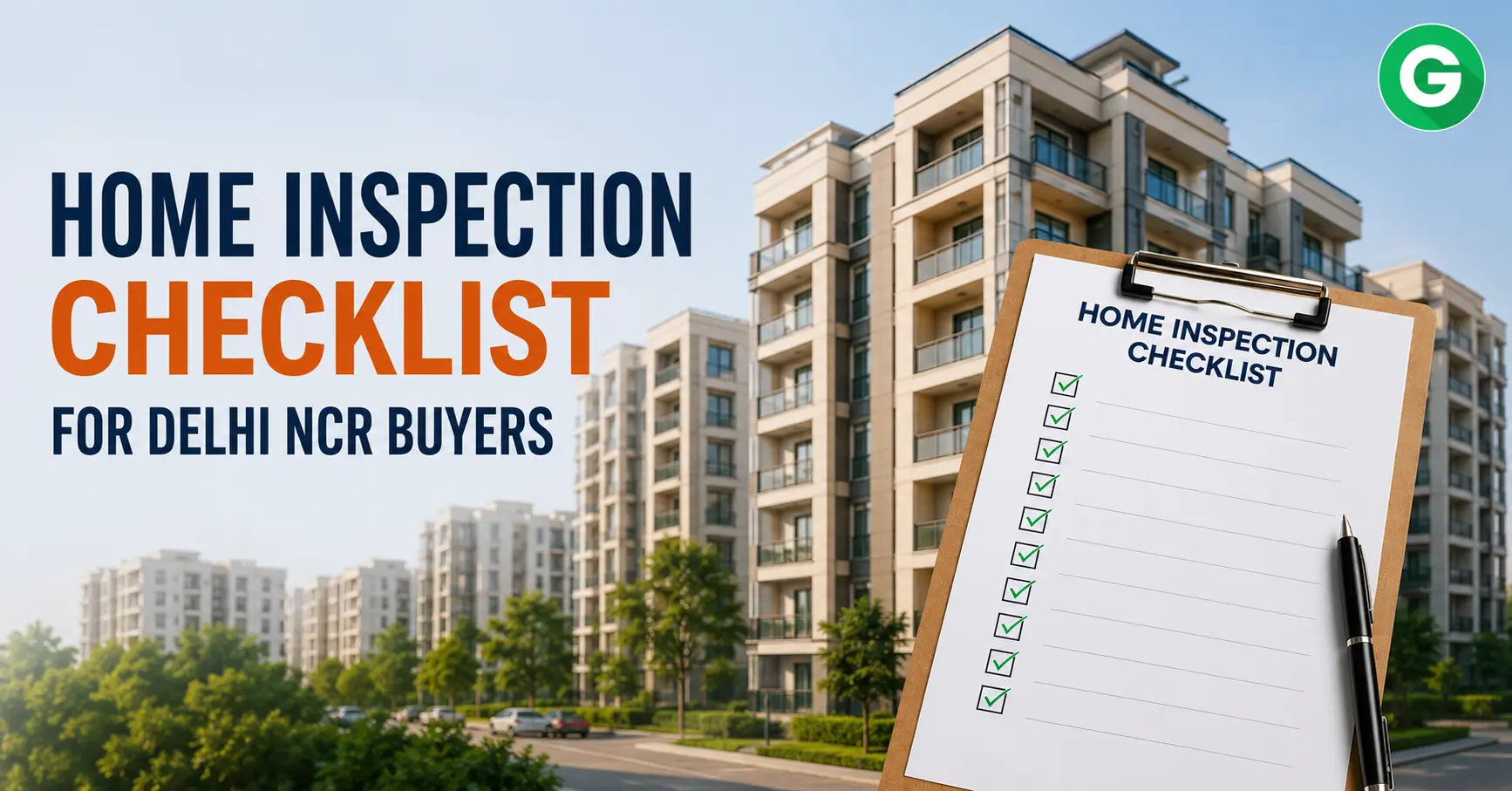
Home Inspection Checklist for Delhi NCR Buyers
Buying a Home in Delhi NCR? Here’s the Checklist You Should Never Skip
A home inspection checklist helps buyers identify structural defects, safety concerns, construction quality, and maintenance issues before finalizing a property purchase. Whether you’re buying a new apartment in Gurgaon, a builder floor in Noida, or an independent house in Ghaziabad, a thorough inspection can prevent expensive repairs and unexpected surprises later.
Why Is a Home Inspection Important?
A property may look perfect during a site visit, but hidden defects often remain unnoticed until after possession. A proper inspection helps you:
- Verify construction quality.
- Identify structural or waterproofing issues.
- Check electrical and plumbing systems.
- Confirm safety features.
- Estimate future maintenance costs.
- Negotiate the property’s price if defects are found.
For buyers in Delhi NCR, where thousands of residential projects are delivered every year, inspecting the property before possession is one of the smartest financial decisions.
Complete Home Inspection Checklist Before Buying a House
| Inspection Area | What You Should Check | Why It Matters |
| Structure | Cracks, uneven walls, ceiling condition | Indicates structural quality |
| Flooring | Hollow tiles, scratches, level surface | Prevents future repair costs |
| Doors & Windows | Smooth operation, locks, alignment | Ensures security and insulation |
| Plumbing | Water pressure, leakage, drainage | Avoids expensive plumbing repairs |
| Electrical | Switches, sockets, MCB, earthing | Improves safety |
| Kitchen | Cabinets, chimney point, sink leakage | Daily usability |
| Bathrooms | Waterproofing, fittings, drainage slope | Prevents seepage |
| Balcony | Railings, flooring slope | Safety and water drainage |
| Ventilation | Natural light and airflow | Better living comfort |
| Safety Features | Fire exits, smoke detectors, CCTV | Essential for apartment living |
1. Check the Structural Condition
The first thing to inspect is the building’s structural quality.
Look for:
- Wall cracks
- Ceiling seepage
- Uneven flooring
- Damp patches
- Poor plaster finish
- Beam or column damage
Hairline cracks may be cosmetic, but wide or diagonal cracks can indicate structural movement and should be evaluated by an experienced civil engineer.
2. Inspect Plumbing Carefully
Plumbing issues are among the most common defects found in new homes.
Your home inspection preparation should include checking:
- Water pressure in all taps
- Hot and cold water supply
- Leakage below sinks
- Bathroom drainage
- Flush operation
- Pipe joints
- Water tank condition
A simple bucket water test can reveal whether bathroom floors drain properly.
3. Test Every Electrical Point
Many buyers overlook electrical testing during possession.
Inspect:
- Every switch and socket
- Fan and AC points
- Distribution board
- Circuit breakers
- Earthing
- Power backup connection
- Internet and TV wiring
Carry a mobile charger or socket tester to verify every electrical outlet.
4. Examine Doors, Windows, and Locks
Proper alignment indicates good construction quality.
Check:
- Door closing smoothly
- Window locking systems
- Balcony doors
- Sliding tracks
- Glass damage
- Rubber sealing
Poor alignment can allow dust, rainwater, and noise inside the home.
5. Inspect Kitchen Quality
The kitchen should be functional from day one.
Things to inspect include:
- Granite countertop finish
- Cabinet alignment
- Sink leakage
- Chimney outlet
- Exhaust fan provision
- Gas pipeline connection
- Electrical sockets
Open every cabinet and inspect hinges for smooth operation.
6. Don’t Ignore Bathroom Inspection
Bathrooms often reveal hidden construction issues.
What does a home inspector check?
- Waterproofing
- Drainage slope
- Tile joints
- Shower pressure
- Exhaust ventilation
- Toilet fittings
- Basin leakage
Pour water across the floor to ensure it flows completely toward the drain without pooling.
7. Check Ventilation and Natural Lighting
Delhi NCR experiences hot summers and humid monsoons. Proper ventilation improves comfort and reduces electricity consumption.
Inspect:
- Cross ventilation
- Window size
- Sunlight direction
- Air circulation
- Balcony openness
A well-ventilated home generally remains cooler and healthier.
8. Verify Common Areas
If you’re purchasing an apartment, inspect common facilities as well.
Look for:
- Lift operation
- Parking allocation
- Fire safety equipment
- Power backup
- CCTV
- Security systems
- Clubhouse quality
- Water supply
These amenities directly affect your everyday living experience.
Common Red Flags in a Home Inspection
Certain issues should immediately raise concerns before purchasing.
Structural Warning Signs
- Wide wall cracks
- Water seepage
- Uneven flooring
- Sagging ceilings
Plumbing Problems
- Water leakage
- Slow drainage
- Low pressure
- Damp walls
Electrical Concerns
- Loose wiring
- Non-functional switches
- Frequent tripping
- Burn marks near sockets
Documentation Issues
- Missing approvals
- Incomplete occupancy documentation
- Undisclosed maintenance charges
These red flags in a home inspection may lead to costly repairs or legal complications later.
Review the Home Inspection Report Carefully
A professional home inspection report documents all observed defects with photographs, recommendations, and repair priorities.
A quality report generally includes:
- Structural observations
- Electrical findings
- Plumbing assessment
- Safety inspection
- Moisture detection
- Estimated repair severity
Review every observation before signing possession papers or releasing the final payment.
Real Example from Delhi NCR
A buyer in Noida Extension booked a ready-to-move apartment and requested an independent inspection before possession. The inspection identified concealed bathroom leakage, two non-functional electrical circuits, and improper balcony drainage. The builder completed all repairs before handover, helping the buyer avoid significant post-possession expenses.
This example highlights why a detailed inspection is worth the effort, even for newly constructed homes.
Conclusion
Buying a home is one of the biggest financial decisions most families make. Following a structured home inspection checklist helps you identify hidden defects, verify construction quality, and make an informed decision before possession. Spending a few hours inspecting the property today can save substantial repair costs and stress in the future.
If you’re planning to buy a property in Delhi NCR, consider getting a professional home inspection before finalizing your purchase.
Need expert guidance before buying your dream home? Contact us today or call our team.
FAQs
Q1. What is included in a home inspection checklist?
A home inspection checklist includes structural condition, plumbing, electrical systems, roofing, flooring, doors, windows, bathrooms, kitchen, ventilation, and safety features.
Q2. When should I conduct a home inspection?
The ideal time is before taking possession or completing the final property payment so that any defects can be rectified by the builder or seller.
Q3. What does a home inspector check?
A home inspector evaluates the property’s structure, electrical wiring, plumbing, moisture issues, ventilation, safety systems, and overall construction quality.
Q4. Can a newly constructed home have defects?
Yes. Even new homes can have issues such as plumbing leaks, poor waterproofing, electrical faults, tile defects, or finishing problems.
Q5. What are the biggest red flags in a home inspection?
Major warning signs include structural cracks, water seepage, drainage issues, electrical hazards, mold growth, and unauthorized construction changes.
Q6. Should I hire a professional home inspector?
Yes. A qualified inspector uses specialized tools and experience to identify hidden issues that most buyers may overlook during a routine visit.
Q7. How long does a home inspection take?
Most residential inspections take between 2 and 4 hours, depending on the property’s size, condition, and complexity.